
Monthly Update - April 2026
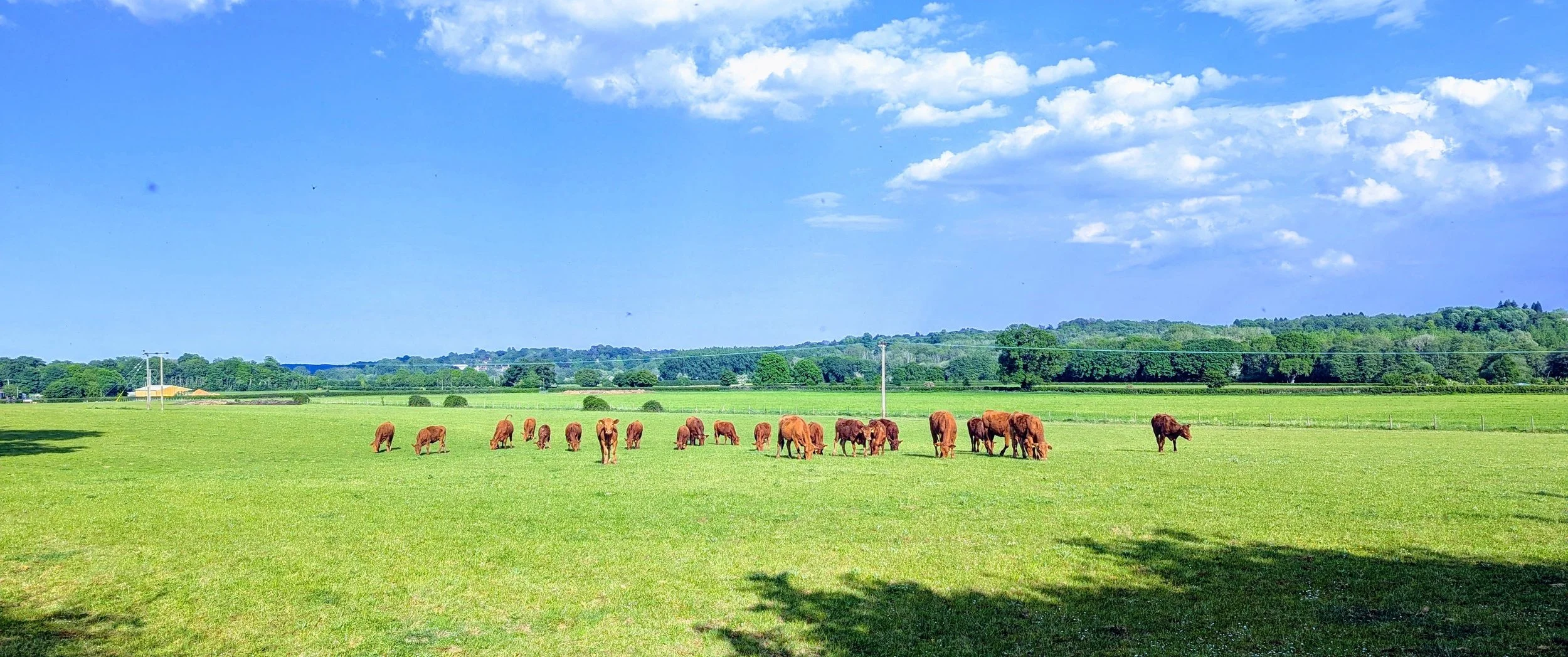
Straight out of university in 1971 we started work on a large farm on the Downs above Blewbury. We had sheep and pigs, and grew the usual wheat and barley, but also sugar beet, potatoes, cabbages, peas for canning at Didcot and a large acreage of lucerne on the greensand. The lucerne was dried and cubed, then sold to mills for livestock feed. Twelve of us worked there. We were very busy from April to October and then had nothing to do unless it rained hard and the sows needed bedding up. We built a cattle shed and riddled potatoes, which did limit the otherwise endless hours of mindless conversation. James Dyson owns it now, farms it simply and sustainably with a minimum of staff, and well over twice the acreage.
When we came to Bradfield we were determined to have work to do throughout the year. And so hedge and tree planting and conservation work in the woodlands helped, and a much smaller team to work the farm. We even made gate posts for McVeigh Parker when they started their business here in Bradfield. It soon became a fact that we were always busy through a year, starting with calving. Then there was lambing, silage making, shearing, haymaking and harvest, contracting, ploughing and planting, even selling firewood. And don’t forget the fireworks with Carey Baptist Church, Christmas Eve Services and open days for Reading MS Society.
It was something of a surprise to us to discover that Rushall Farm was the case study in a geography text book being used by our 10-year-old granddaughter. She hasn’t exactly focused academically at school in spite of the best efforts of her teachers, although she did become school hero when a mouse jumped out of her school bag at the start of her Latin lesson at the beginning of last term. He was fondly named Mini Mus to combine French and Latin. She became the centre of attention again when she realised that they were studying Rushall Farm. Various questions had to be answered including “Having studied the description of the farm, when do the Bishop family go on holiday?” This was a question that we never discovered the answer to over the 40 years we worked here, and haven’t done very well on the subject since then.
Steve Waters, on the other hand, like Mr Dyson, has adjusted to the present difficult times in farming and so is taking his business forward with simpler systems. He now has fewer sheep, more suckler cows, more legume and herbal rich grass and less arable, giving him, as a possible bonus, more time to learn about holidays?